
Farm Equipment Auction Process: What Happens From Start to Finish
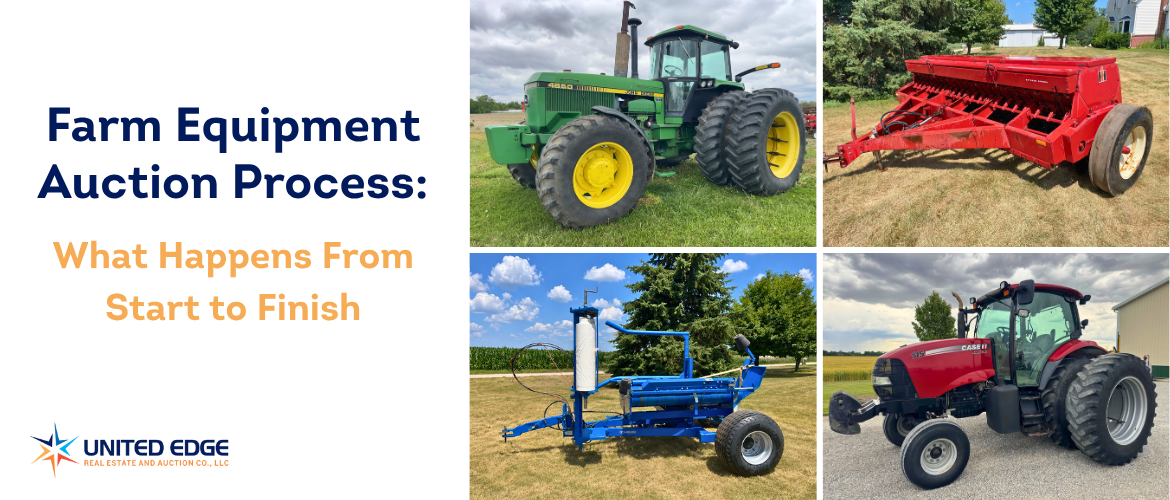
Farm Equipment Auction Process: What Happens From Start to Finish
The farm equipment auction process is not complicated, but it does move fast.
Most equipment ends up at auction for a reason. Retirement, downsizing, or simply clearing out machinery that is no longer being used. Auctions bring everything together in one place and let the market decide what that equipment is worth.
What matters is how the process actually plays out once equipment is committed to a sale.
How the Farm Equipment Auction Process Starts
Everything begins with the equipment itself.
Auction houses take inventory, document conditions, and gather details that potential buyers care about. That includes make, model, hours, attachments, and service histories.
Condition matters, but presentation matters just as much. Clean equipment with clear information will always draw more attention than something that looks neglected or uncertain.
At this stage, conversations around reserve price or selling absolute take place. Some sellers want protection. Others want movement and are willing to let competitive bidding take over.
Where Interest Is Built Before Auction Day
The farm equipment auction process does not start on auction day. It starts well before that.
Auction companies push listings out through:
Buyer networks
Online auctions platforms
Email lists
Social media
This is where potential buyers first engage with the equipment.
Photos, descriptions, and past sale prices all play a role. Buyers compare listings. They look for machines that are ready to work or priced in a way that makes sense.
The more attention a piece of equipment gets before auction day, the more activity it usually sees once bidding starts.
What Happens During Live and Online Auctions
By the time auction day arrives, most buyers already know what they are watching.
Some auctions are live. Some are online. Many are a mix of both.
Live auctions bring energy. Equipment is sold one piece at a time, and the pace moves quickly. Bidders react in real time, and competitive bidding builds as interest increases.
Online auctions stretch that process out. Buyers can place bids over time, sometimes with a maximum bid already set. The system handles increments automatically until someone steps in higher.
In both cases, the result is the same. The equipment sells when bidding stops.
How Competitive Bidding Impacts Sale Prices
The entire farm equipment auction process is built around competition.
When multiple buyers want the same tractor, combine, or implement, the price moves. Not because of negotiation, but because each buyer sees value in owning it.
This is where auctions offer something different from private sales.
Instead of one buyer making an offer, several buyers are forced to act at the same time. That pressure often leads to stronger sale prices, especially for well maintained equipment.
What Buyers Pay Attention To
Buyers are not guessing when they bid.
They look at:
Service histories
Hours of use
Overall condition
Comparable sale prices
They also pay attention to how the equipment has been presented.
Clear listings build confidence. Missing details create hesitation.
In the farm equipment auction process, confidence usually leads to stronger bidding.
What Happens After the Equipment Sells
Once bidding ends, things move quickly.
The winning bidder is responsible for payment based on the auction terms. After that, equipment is picked up or transported.
For sellers, the process is direct. Payment is issued once the transaction is completed, minus any agreed fees with the auction company.
There is no extended negotiation after the fact. The deal is done when the bidding stops.
Why Auctions Continue to Be Used for Farm Equipment
There is a reason auctions remain a common choice for selling your farm equipment.
They bring:
A defined timeline
Access to a wide group of potential buyers
A transparent auction process
A clear outcome based on demand
For many, it is simply the most efficient way to move equipment and convert it into cash.
Where the Right Auction Company Makes a Difference
Not all auction houses operate the same way.
Marketing, buyer reach, and how equipment is positioned all affect the outcome.
A reputable auction company understands:
What buyers are looking for
How to present equipment correctly
How to create momentum leading into auction day
That difference shows up in participation and, ultimately, in results.
Final Thoughts on the Farm Equipment Auction Process
The farm equipment auction process is built around timing, visibility, and competition.
When those three things line up, equipment moves and buyers respond.
For sellers, it comes down to understanding how the process works and putting equipment in the right environment to perform.